Granite is the quintessential tough rock. Its reputation for durability makes it the preferred aggregate for high-grade construction projects, from major infrastructure to residential foundations. Yet, beneath its stoic exterior lies a complex interplay of physical and chemical properties that present unique challenges to mobile crushing operations. To the untrained eye, granite is simply granite. However, variations in moisture content, mineral composition, and compressive strength directly influence everything from throughput capacity to wear-part longevity. Ignoring these subtleties can transform a seemingly routine project into a costly battlefield of downtime and mechanical stress. This article explores the intricate relationship between granite’s inherent characteristics and mobile crusher performance, offering practical insights for operators seeking to optimize their processing strategies.
The Spectrum of Granite Hardness and Abrasiveness
Not all granite is created equal. The mineralogical composition, particularly the ratio of quartz to feldspar, dictates its hardness and abrasiveness. This is the primary determinant of how the rock will interact with the crushing chamber, influencing both the energy required and the rate of wear on essential components.
Quartz Content and Its Impact on Wear Parts
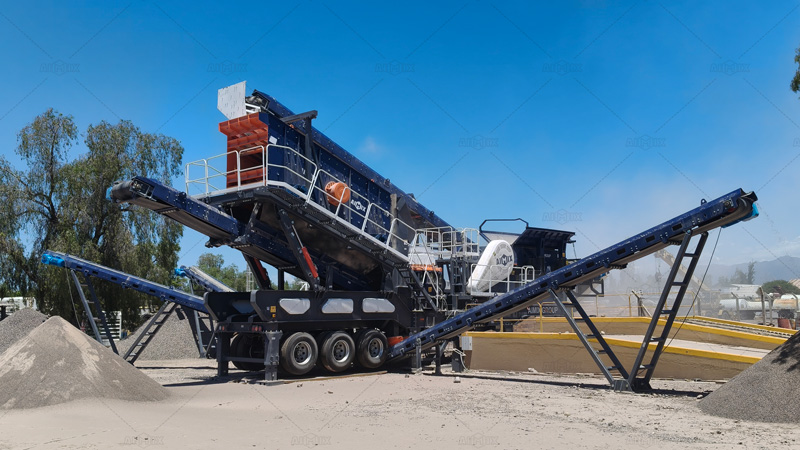
The principal culprit in component wear is quartz, a mineral renowned for its extreme hardness on the Mohs scale. In granites with a high quartz percentage, the material acts as a relentless abrasive against the crusher’s jaw plates, blow bars, and cone liners. Each cycle of compression or impact grinds the quartz particles against the manganese steel, causing a slow but steady erosion of the metal. This phenomenon, known as abrasion, dictates the replacement cadence for wear parts. A professional mobile crusher equipped with high-chrome or martensitic steel blow bars will exhibit superior resistance to this micro-cutting wear, extending the interval between maintenance shut-downs. Conversely, softer, feldspar-rich granites, while still tough, are less abrasive, allowing for a more moderate wear profile and longer operational periods.
The Nexus of Compressive Strength and Energy Consumption
Compressive strength is the measure of force required to fracture the rock. High-strength granite demands a substantial amount of energy to be crushed, directly correlating to fuel consumption and the hydraulic load on the granite crusher. This relationship is not linear; as strength increases, so too does the machine’s operational strain. The crusher must work harder to induce microfractures within the rock matrix. Consequently, a mobile plant with a larger flywheel and a robust hydraulic motor is better suited to handle high-strength material without sacrificing throughput. Operators must calibrate the crusher’s closed side setting (CSS) and rotor speed to match the material’s strength. Processing high-strength granite with a setting that is too tight can lead to binding and excessive wear, while a setting that is too loose will produce oversized material, failing to meet spec and forcing recirculation.
Hydrological Factors and Screening Efficiency
Moisture is often the hidden variable that orchestrates a cascade of operational issues. A dry, dusty granite is relatively predictable. However, the introduction of moisture—whether from rain, groundwater, or the washing process—can dramatically alter material flow and screening performance.
Clogging, Binding, and the Stickiness Factor
When granite contains excessive moisture, fine particles cling to the larger aggregates, creating a cohesive, clay-like paste. This paste can clog the feeder, causing bridging at the hopper and starving the crusher of material. More critically, it binds to the screen media, blinding the apertures and drastically reducing screening efficiency. This phenomenon, known as blinding, prevents the effective separation of fines from the final product. The result is a cascading failure: the crusher produces more fines, which, when wet, are even stickier, exacerbating the blinding issue. This necessitates frequent stops to hose down the screens or, in severe cases, the use of a rubberized screen media designed to flex and shed the moisture-laden material.
Impact on Conveyor Systems and Material Flow
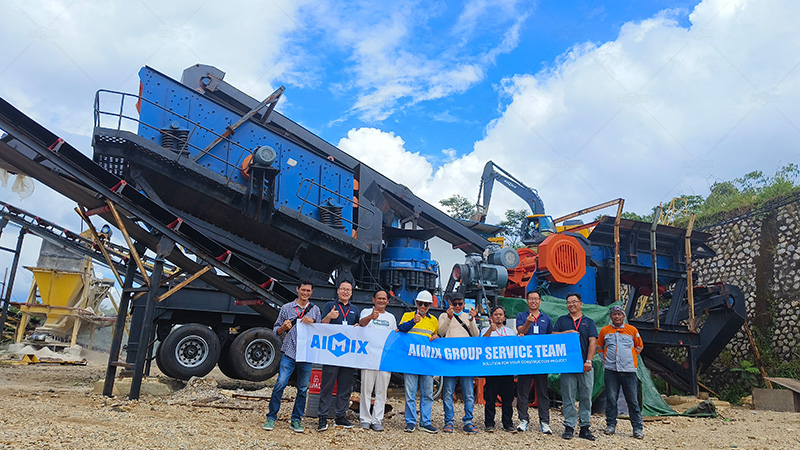
The impact of moisture extends to the material transfer points. High-moisture granite tends to adhere to the rubber belting of conveyors, causing carryback and fugitive material spillage. This spillage not only represents a loss of valuable product but also constitutes a serious safety hazard and requires additional clean-up labour. The effective management of such problematic material often necessitates the implementation of belt scrapers and wash-box systems to maintain operational cleanliness. In certain challenging conditions, drier, high-efficiency screening techniques, such as using a vibrating screen with a larger amplitude, are required to overcome the cohesive forces of the wet material and maintain a consistent feed to the aggregate crusher.
Adapting Mobile Crushing Strategies for Granite
To achieve optimal performance when crushing granite, a reactive and adaptive strategy is essential. Static settings and generic approaches will inevitably lead to suboptimal results. Success requires a dynamic understanding of the material being fed and a willingness to adjust operational parameters accordingly.
Pre-Crushing and Scalping Techniques
One of the most effective strategies for mitigating wear and optimizing performance is pre-screening. By removing the natural fines and undersized material before it enters the crusher, the machine is shielded from unnecessary wear and the energy required to crush material that is already at spec is conserved. This process, known as scalping, also reduces the moisture content in the feed material by eliminating the fine particles most prone to clumping. A mobile crusher equipped with a robust vibrating grizzly feeder can effectively scalp off the dirt and fines, ensuring that only competent, crushable rock enters the jaw or impactor chamber, thereby enhancing the overall efficiency and reducing the load on the downstream screening plant.
Selecting the Optimal Crushing Chamber
The inherent properties of granite lean heavily in favor of compression-based crushing, such as that offered by mobile jaw crushers and cone crushers, over impact crushers. While an impactor is versatile, it incurs significantly higher wear rates on highly abrasive materials due to the high-velocity impacts that shatter the rock. For abrasive and high-strength granite, a cone crusher with a specialized crushing chamber is often superior. It utilizes laminated crushing, where the rock is crushed against other rock, reducing the direct metal-to-rock contact and lowering wear costs per tonne. The selection of a manganese liner profile—whether it be extra coarse, coarse, or fine—must be matched to the specific feed gradation and the desired product shape to maximize profitability and maintain product quality over the life of the liners.