Boat travel lifts are essential equipment in shipyards, marinas, and waterfront facilities, enabling the safe lifting, transport, and launching of vessels. However, when these systems operate in cold climate regions—such as Northern Europe, Canada, Russia, and parts of the Northern United States—they face a series of unique engineering and operational challenges. Freezing temperatures, ice formation, snow accumulation, and material brittleness can significantly impact performance, safety, and equipment lifespan.
To ensure reliable operation year-round, modern boat travel lifts must be designed and maintained with cold-climate adaptation strategies. This article explores the major challenges faced in low-temperature environments and provides practical engineering and operational solutions to overcome them.
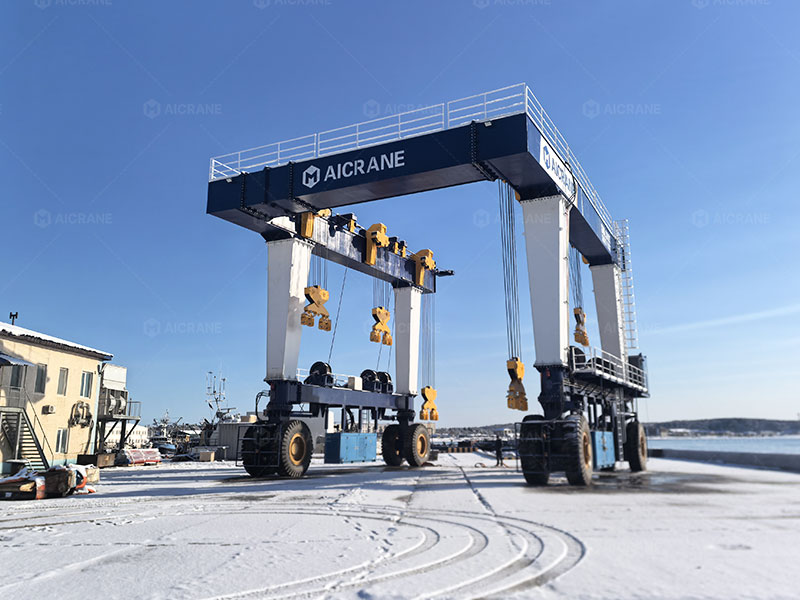
1. Low-Temperature Effects on Hydraulic Systems
One of the most critical components of a boat travel lift is its hydraulic system, which controls lifting and lowering operations. In cold climates, hydraulic oil viscosity increases significantly as temperatures drop. This results in:
- Slower response of hydraulic cylinders
- Reduced lifting efficiency
- Increased pump load and energy consumption
- Risk of system startup failure in extreme cold
In severe cases, hydraulic oil may even become too thick to circulate properly, causing delayed or uneven lifting movement.
Solutions:
To overcome these issues, manufacturers and operators typically adopt the following measures:
- Low-temperature hydraulic oil: Special synthetic hydraulic fluids designed for -30°C or lower environments maintain stable viscosity.
- Oil tank heaters: Electric heating systems keep hydraulic oil within optimal operating temperature before startup.
- Pipe insulation: Thermal insulation around hydraulic pipelines reduces heat loss.
- Preheating cycles: Automated pre-start circulation systems warm up hydraulic fluid before full load operation.
These measures ensure smooth hydraulic response even under extreme winter conditions.
2. Steel Brittleness and Structural Stress
Steel structures used in boat travel lifts can experience reduced toughness at low temperatures. This phenomenon, known as cold brittleness, increases the risk of crack formation under heavy loads or dynamic stress.
In addition, repeated freeze-thaw cycles can cause microstructural fatigue over time, especially in welded joints and high-stress areas of the frame.
Solutions:
To enhance structural reliability in cold environments:
- Low-temperature resistant steel grades: Use materials such as Q345D or ASTM A572 low-temperature steel.
- Optimized welding processes: Controlled preheating and post-weld heat treatment reduce internal stress.
- Finite element structural analysis (FEA): Ensures load distribution minimizes stress concentration points.
- Regular non-destructive testing (NDT): Ultrasonic and magnetic testing helps detect early crack formation.
These design practices significantly extend the service life of boat gantry cranes operating in Arctic or subarctic regions.
3. Ice Formation on Mechanical Components
Ice accumulation is one of the most dangerous operational issues in cold climates. It can form on tires, steel structures, hydraulic arms, and lifting slings. Ice buildup may cause:
- Reduced tire traction and slipping risks
- Blockage of mechanical movement
- Increased structural weight load
- Safety hazards during vessel lifting
Solutions:
Effective anti-icing strategies include:
- Heating systems on critical components: Tire heating or axle heating systems prevent freezing.
- Hydrophobic coatings: Special surface coatings reduce ice adhesion on steel structures.
- Regular de-icing protocols: Use of environmentally safe de-icing agents on working surfaces.
- Covered storage areas: Keeping lifts under shelters reduces direct exposure to snow and freezing rain.
Some advanced port facilities also integrate infrared heating systems for critical movement zones.
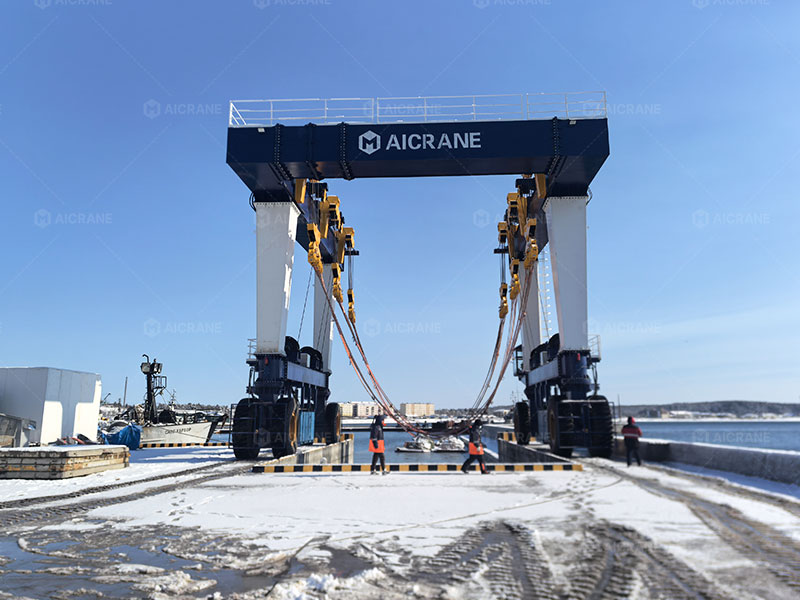
4. Electrical System Failures in Extreme Cold
Electrical components are highly sensitive to temperature fluctuations. In cold climates, insulation materials may harden, battery efficiency drops, and condensation can lead to short circuits when equipment warms up.
Common issues include:
- Reduced battery capacity in control systems
- Cable cracking due to thermal contraction
- Sensor malfunction or signal delay
- Control panel display freezing
Solutions:
To maintain electrical reliability:
- Cold-rated electrical cables and insulation
- Enclosed and heated control cabinets
- Battery heating systems for mobile boat hoists
- Moisture-proof sealing and IP65+ protection ratings
- Redundant sensor systems for critical operations
These improvements ensure that control systems remain stable even at -40°C conditions.
5. Tire and Mobility Challenges on Snow and Ice
Boat travel lifts rely on large rubber tires for mobility. In cold regions, snow, ice, and frozen ground significantly reduce traction and maneuverability. This can lead to:
- Slipping during vessel transport
- Uneven load distribution
- Increased tire wear
- Difficulty in precise positioning
Solutions:
Engineering improvements for mobility include:
- Deep tread winter tires or polyurethane-coated tires
- Four-wheel or multi-wheel independent drive systems
- Anti-slip ground treatment in working yards
- Hydraulic steering stabilization systems
- Automatic traction control systems
Some advanced designs also incorporate electronic torque distribution to improve grip on icy surfaces.
6. Lubrication System Issues in Low Temperatures
Lubricants used in bearings, gearboxes, and moving joints become thicker in cold conditions, reducing their effectiveness. This leads to increased friction and accelerated wear.
Solutions:
- Use low-temperature synthetic lubricants
- Install automatic centralized lubrication systems
- Implement lubricant heating units in critical gearboxes
- Schedule more frequent maintenance cycles in winter seasons
Proper lubrication management is essential to prevent mechanical failure during cold operation.
7. Operator Safety Risks in Cold Environments
Cold climates not only affect machinery but also significantly increase risks for operators. Slippery surfaces, low visibility during snowstorms, and reduced reaction times due to cold exposure can create hazardous conditions.
Solutions:
- Heated operator cabins with anti-fog systems
- Ergonomic controls designed for gloved operation
- Enhanced LED lighting systems for low visibility conditions
- Remote control operation to reduce exposure
- Real-time monitoring and alarm systems
By improving operator comfort and visibility, overall operational safety is greatly enhanced.
8. Preventive Maintenance in Winter Conditions
Maintenance routines must be adapted for cold climates. Standard maintenance schedules may not be sufficient due to accelerated wear and environmental stress.
Key strategies include:
- Pre-winter full system inspection
- Hydraulic and lubrication fluid replacement with cold-grade materials
- Battery and electrical system testing before cold season
- Tire pressure adjustments for temperature variation
- Continuous monitoring of structural stress points
A proactive maintenance approach is critical to avoid unexpected downtime during peak winter operations.
Conclusion
Operating Aicrane boat travel lifts in cold climates presents a complex set of challenges involving hydraulics, structural integrity, electrical systems, mobility, and safety. However, with modern engineering solutions such as low-temperature materials, heating systems, anti-icing technologies, and intelligent monitoring systems, these challenges can be effectively managed.
As global maritime industries expand into colder regions, the demand for reliable cold-climate boat travel lift systems continues to grow. Facilities that invest in proper design adaptation and preventive maintenance not only improve operational efficiency but also significantly extend equipment lifespan and safety performance.
Ultimately, cold climate operation is not just about surviving harsh conditions – it is about engineering resilience into every component of the boat travel lift system.