The West African nation of Guinea is sitting on a powder keg of infrastructure potential. With bauxite mines expanding and urban centers like Conakry bursting at the seams, the demand for concrete has never been higher. Yet, a fierce debate rages among small contractors and mining subcontractors: should they buy a self loader concrete mixer through a local distributor, or should they bypass the middleman and import directly? The core argument is simple. Distributors claim they offer convenience, parts, and support. Critics argue that their price markups are predatory, often doubling the FOB cost from China or Turkey. This article will dissect the pricing landscape in Guinea. We will compare distributor quotes against direct import costs. We will evaluate the true value of after-sales support. And we will deliver a final verdict on whether those premium prices can ever be justified.
1. The Distributor Markup: Unpacking the Premium
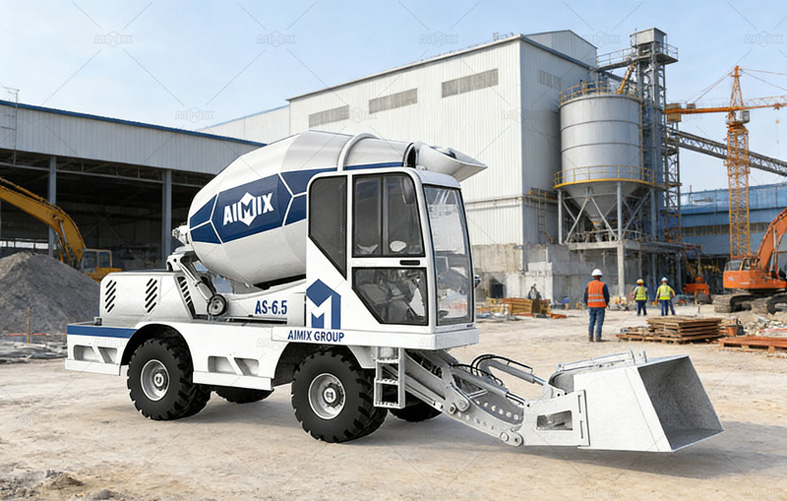
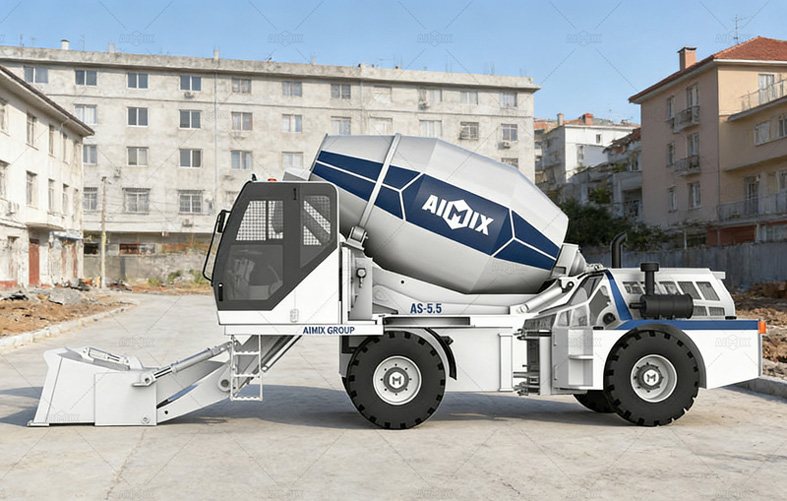
Let me be blunt. The sticker shock in Guinea is real. A 3.5 cubic meter self-loading mixer that costs $14,000 FOB from a Chinese factory can end up with a $28,000 to $35,000 price tag at a distributor’s lot in Conakry. That is a 100% to 150% markup. Distributors defend this by citing “freight, insurance, and handling.” Yes, shipping a 7-ton machine from Shanghai to the Port of Conakry costs roughly $3,500. Add 15% import duty and 18% VAT. The math still doesn’t add up.
The Hidden Cost of Inventory Holding
A passionate argument for the distributor is that they tie up capital. They order a container of six machines. They pay for warehousing. They pay staff. In a volatile market like Guinea, where the Guinean Franc can fluctuate wildly, holding inventory is a genuine risk. A distributor who bought machines when the exchange rate was 9,500 GNF to the dollar might have to sell at a higher nominal price if the Franc weakens to 10,500. That hedge has value. However, the inventory premium rarely exceeds 15%. It certainly doesn’t justify doubling the price. Smart contractors are fighting back. They are negotiating container deals directly with manufacturers and splitting the shipment with a partner. This “cooperative buying” slashes the landed cost to around $22,000 per unit.
Comparing Quotes: The $10,000 Difference
I recently analyzed three quotes for a 4.0 cubic meter diesel self loading mixer in Guinea. Distributor A (European brand sold locally) asked $38,000. Distributor B (Chinese brand, established local warehouse) asked $31,000. A direct quote from a mid-tier Chinese factory (FOB Shanghai) was $13,500. Adding sea freight ($4,000), insurance ($500), customs clearing ($1,500), and port fees ($1,000) brings the total to $20,500. That leaves a $10,500 gap compared to Distributor B. That gap represents pure profit or “convenience cost.” For a contractor buying one machine, the $10,500 might be worth the reduced hassle. For a fleet buyer purchasing five units, that $52,500 savings pays for a sixth machine. Argumentatively, the value proposition flips entirely at scale.
2. The Parts Predicament: Is Support an Illusion?
Distributors scream “support!” from the rooftops. They claim that their premium prices buy you access to a warm body in a warehouse who can hand you a hydraulic pump seal on a Tuesday morning. But let’s test that claim with real Guinea logistics. I have seen distributors stock engines and tires. I have rarely seen them stock the granular stuff: the specific circuit boards for the control panel, the wear plates for the mixing drum, or the proprietary oil seals for the planetary gearbox. When those niche parts fail, the distributor usually shrugs and orders from China anyway. You wait three weeks. You could have ordered the part yourself.
The Aftermarket Ecosystem in Conakry
Here is the passionate truth. Conakry has vibrant, chaotic, and highly effective mechanical workshops. These are not factory-trained technicians. They are magicians. They can fabricate a bushing from scrap steel. They can rewire a control panel with generic relays. They often know the Chinese large concrete mixer machines better than the Chinese factories do. A distributor might offer a “warranty,” but enforcing that warranty requires shipping a broken component back to the supplier. The freight often exceeds the part cost. Consequently, many contractors ignore the distributor’s warranty and rely on local mechanics from the get-go. If you are going to rely on the street mechanic anyway, why pay the distributor premium? The argument for direct import grows louder.
However, the distributor does provide one irreplaceable asset: speed for consumables. Hydraulic hoses burst. Mixing blades snap. A distributor with a $30,000 part stock can get you running in 24 hours. A direct importer might wait 30 days. For a contractor facing $1,000 per hour in downtime on a mining site, that 29-day difference justifies a massive premium. The calculation hinges on your hourly downtime cost. If you are a small villa builder pouring one slab a week, wait the 30 days. If you are supplying concrete to a bauxite haul road that must open on Monday, pay the distributor.
3. The Direct Import Gambit: Risks and Rewards
I am not arguing that direct import is easy. It is a gauntlet of paperwork. You need a customs broker. You need to understand the COTEC (pre-shipment inspection) process. You risk clearing a machine only to find the battery is dead, the paint is scratched, and the manual is in Mandarin. But the reward is a machine cost that is 30% to 40% lower. For the passionate entrepreneur, this is not just money. It is competitive firepower. A lower-cost machine means you can bid lower for contracts. It means you can take on riskier projects.
Financing the Import
Guinean banks are conservative. They finance distributors but rarely finance a single importer for a “strange” Chinese machine. This creates a gatekeeping function. If you cannot pay cash up front, you are forced into the concrete mixing machine distributor’s financing scheme, which often adds another 12% interest on top of the inflated price. Consequently, the competitive landscape in Guinea is bifurcated. Cash-rich operators buy direct and dominate the low-cost supply. Cash-poor operators pay the distributor premium and struggle to compete on price. This is not a healthy market. It is a market distorted by access to capital.
The Verdict on Competitiveness
Are distributor prices in Guinea competitive? Against a Western European standard, no. They are exorbitant. Against the reality of Guinean logistics, corruption risk, and lack of supplier credit, they are a necessary evil. But “necessary” does not mean “fair.” Contractors who are willing to form buying groups, hire a reputable clearing agent, and accept a 30-day lead time can beat distributor prices by 40%. Those who prioritize immediate availability and zero paperwork will pay the premium. The market is competitive only if you have the stomach to compete. If you wait for a distributor to offer you a fair price, you will be waiting forever.