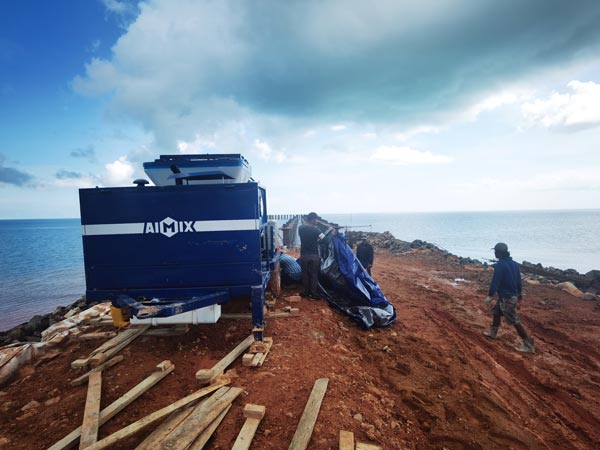
Resort infrastructure development in Indonesia often combines several types of concrete work within a relatively confined project area. Villas, hotel buildings, swimming pools, retaining walls, access roads, utility structures, foundations, drainage channels, and waterfront facilities may all require concrete at different stages. The placement method therefore needs to respond to more than concrete volume. Terrain, island access, narrow internal roads, vegetation, excavation depth, building density, and the distance between the concrete discharge point and the final placement area can all influence the construction sequence.
Concrete placement becomes particularly important when a resort is developed in a coastal or mountainous environment. A mixer truck may reach the main entrance but not the foundation or structure under construction. Some sites also have limited space for equipment because landscaping, existing buildings, temporary facilities, and tourist operations occupy much of the available ground. Contractors consequently need to coordinate concrete production, transportation, pumping, reinforcement, formwork, and finishing as one continuous operation. The appropriate equipment can change from one construction stage to another, depending on the geometry and accessibility of each pour.
How Resort Site Conditions Influence Concrete Placement
Coastal and Island Locations Can Complicate Material Movement
Many Indonesian resorts are developed along coastlines or on islands where construction materials may need to pass through ports, temporary roads, or restricted access routes before reaching the work area. The logistical chain can be longer than the actual distance between the batching point and the building. Aggregates, cement, reinforcement steel, and other materials must arrive in a sequence that supports the concrete schedule.
Once concrete production begins, timing becomes more critical. Fresh concrete cannot simply remain in a vehicle while the construction crew searches for an accessible discharge point. Contractors therefore assess where trucks can stop, where concrete can be produced, and how material will travel from the discharge location to the final structure.
Terrain Can Determine Where Concrete Equipment Is Positioned
Resort projects may extend across slopes, terraces, elevated ground, or irregular coastal terrain. A concrete pump in Indonesia positioned at the lowest accessible point may need to deliver concrete uphill or over a considerable horizontal distance. Conversely, equipment placed near the structure may interfere with other construction activities.
Pipeline Geometry Should Be Planned Before the Pour
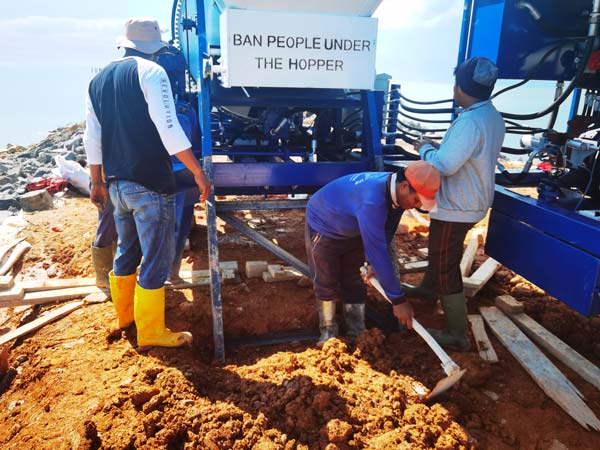
When pumping is required, the pipeline route should account for horizontal distance, vertical rise, bends, hose length, and the location of the final discharge point. Excessive bends can complicate pumping, while poorly supported pipelines may create operational hazards. Planning the route before concrete arrives gives the placement crew a more predictable working sequence.
Selecting Concrete Equipment for Different Resort Structures
Small and Scattered Pours May Need Integrated Equipment
Resort construction rarely consists of one uniform concrete operation. A villa foundation may require a relatively small pour, while a hotel structure or retaining wall may demand a much larger and more continuous supply. For smaller or dispersed work areas, a concrete mixer pump in Indonesia can combine concrete mixing and pumping within one equipment arrangement. This can reduce the number of separate machines required at the work face and provide greater flexibility when concrete demand changes between locations.
Trailer-Based Pumping Can Separate Delivery From Placement
When ready-mixed concrete is available but the mixer truck cannot approach the actual pouring location, a trailer-mounted pumping system can create a useful separation between delivery and placement. A concrete trailer pump for sale in Indonesia can receive concrete at an accessible discharge point and transport it through a pipeline to foundations, slabs, retaining structures, or other areas that are difficult for delivery vehicles to reach directly.
Line Pumping Is Useful for Long or Restricted Routes
A line pump is particularly relevant when concrete must travel through a planned pipeline rather than be discharged directly from a boom. A concrete line pump in Indonesia can be positioned away from the final pouring location while delivery hoses or pipes extend toward the work area. This arrangement can be useful for underground structures, villas behind restricted access routes, deep foundations, and other resort facilities where direct truck access is limited.
Manage Concrete Placement Across Different Resort Facilities
Hotel and Villa Foundations Require Controlled Discharge
Foundations often involve reinforcement cages, anchor components, formwork, and relatively confined excavation spaces. Concrete must flow around reinforcement without creating voids or excessive segregation. The crew should establish the discharge sequence in advance and maintain appropriate consolidation throughout the pour.
For villa developments with multiple buildings, the construction team may also need to repeat similar foundation operations across several locations. Equipment mobility and setup time can therefore influence productivity. The best arrangement may be one that can move efficiently between work zones rather than one designed only around the largest individual pour.
Swimming Pools and Retaining Walls Create Different Pumping Requirements
Swimming pools often contain deep excavations, dense reinforcement, stepped structures, and narrow working spaces. Retaining walls may involve long linear pours where the concrete needs to be distributed progressively along the wall length. Both situations can benefit from a controlled pipeline route because the small concrete pump can remain in a stable position while the placing crew works at different points.
Access Roads and Drainage Structures Require Consistent Material Flow
Concrete roads, drainage channels, culverts, and pedestrian infrastructure may be distributed across the resort rather than concentrated around a single building. The concrete supply strategy should therefore account for repeated relocation. The equipment needs to reach successive work areas without creating excessive disruption to other construction operations or damaging completed sections of the site.
Coordinate Concrete Supply With the Resort Construction Schedule
Concrete Delivery Should Follow the Actual Pouring Window
Resort projects frequently involve several trades working simultaneously. Excavation, reinforcement installation, electrical conduits, plumbing, waterproofing, and formwork may all need to be completed before a concrete pour can begin. Concrete delivery should therefore be scheduled around the confirmed readiness of the work area rather than simply following a predetermined calendar.
When contractors evaluate concrete line pump for sale in Indonesia options, the comparison should extend beyond the pump’s nominal output. Pumping distance, aggregate size, concrete consistency, pipeline diameter, site access, expected daily volume, and relocation requirements can all affect practical performance. A machine that matches the complete project workflow is more relevant than one selected only because it has a higher theoretical capacity.
Cleaning and Relocation Should Be Part of the Pour Plan
Concrete placement does not end when the final section is filled. Pump lines need to be cleaned, residual concrete managed, and equipment prepared for the next operation. On a resort site, this is particularly important because access routes may be shared with other trades. A clearly defined cleaning area and equipment relocation route can prevent concrete residue from becoming a secondary site-management problem.
Adapt Concrete Placement as the Resort Develops
Construction Access Changes Over Time
A resort site is rarely static. Temporary roads may disappear, buildings may restrict access, landscaping may occupy previously open areas, and completed structures can alter the available equipment positions. A concrete placement system that works during the foundation stage may require modification during superstructure or external infrastructure construction.
Equipment Selection Should Reflect the Whole Construction Sequence
Contractors should consider not only the immediate pour but also how concrete will be supplied during subsequent stages. Smaller integrated systems may suit scattered villa construction, while trailer-mounted pumps or larger pumping arrangements may be appropriate for hotel structures and infrastructure with greater concrete demand. The decision should reflect the expected volume, access conditions, pumping route, and frequency of relocation.
Effective concrete placement during Indonesian resort development is ultimately a coordination task. The concrete must move through a defined chain from material supply and mixing to pumping, discharge, consolidation, finishing, and curing. Coastal access, difficult terrain, dispersed buildings, and changing site layouts can all reshape that chain. By matching production and pumping equipment to each construction stage, contractors can maintain a more controlled concrete workflow while adapting to the distinctive logistical conditions of resort infrastructure development.