In modern industrial lifting applications, 30 ton gantry cranes are widely used in steel fabrication plants, precast concrete yards, shipyards, warehouses, and heavy equipment assembly areas. At this capacity level, structural strength, operational stability, and long-term reliability are critical factors that directly affect safety and productivity. One of the most widely adopted structural designs for 30 ton gantry cranes is the box girder structure.
Compared with traditional truss or I-beam girders, the box girder design offers significant mechanical and operational advantages, especially for medium to heavy-duty lifting. This article provides a comprehensive analysis of why box girder structures are the preferred choice for 30 ton gantry cranes, focusing on strength, stiffness, durability, safety, and lifecycle performance.
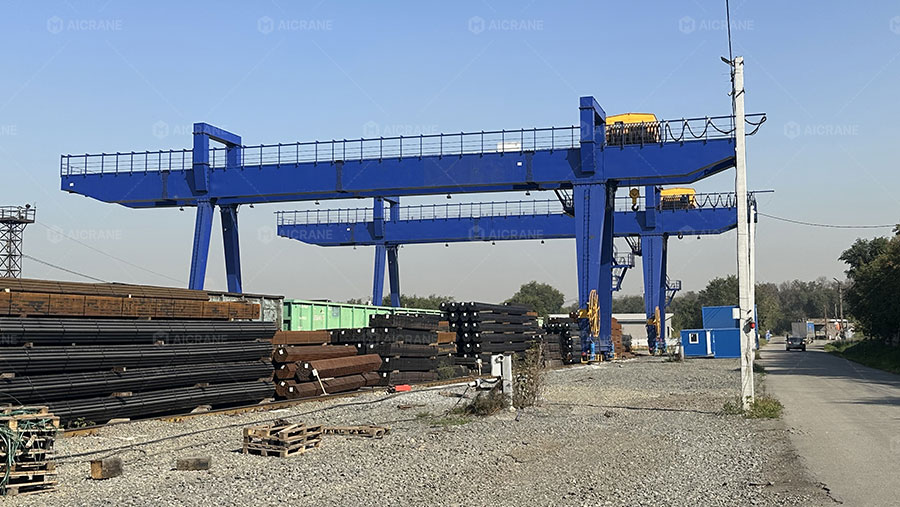
What Is a Box Girder Structure?
A box girder is a closed, hollow steel structure typically fabricated by welding steel plates into a rectangular or trapezoidal cross-section. Unlike open-section beams, box girders distribute stresses evenly across all sides of the structure.
In gantry crane for sale, box girders are commonly used as:
-
Main girders (single or double girder configurations)
-
End beams
-
Gantry legs (in some heavy-duty designs)
For a 30 ton gantry crane, box girders provide the optimal balance between load-bearing capacity and structural efficiency.
Superior Load-Bearing Capacity
One of the most important advantages of box girder structures in 30 ton gantry cranes is their high load-bearing capability.
Why This Matters:
-
A 30 ton crane experiences significant bending moments during lifting and trolley travel.
-
Concentrated wheel loads from the hoist and trolley demand strong resistance to deformation.
Box Girder Advantage:
-
The closed-section design increases the moment of inertia, allowing the girder to carry heavy loads with less material.
-
Stress is distributed evenly across the girder walls, reducing localized stress concentrations.
-
The structure maintains stability even under eccentric or dynamic loads.
This makes box girders especially suitable for frequent lifting cycles and high-duty classifications (A5–A6) common in industrial environments.
High Structural Rigidity and Reduced Deflection
Deflection control is critical in 30 ton double girder gantry crane operation. Excessive deflection can:
-
Reduce positioning accuracy
-
Increase load sway
-
Accelerate fatigue damage
Box Girder Performance:
-
Box girders offer excellent torsional rigidity, preventing twisting during trolley movement.
-
Vertical deflection is significantly lower compared to open-section girders.
-
Improved rigidity enhances lifting precision, particularly important for:
-
Precast concrete components
-
Steel coils
-
Heavy machinery parts
-
Lower deflection also improves operator confidence and safety, especially during slow, precise lifting operations.
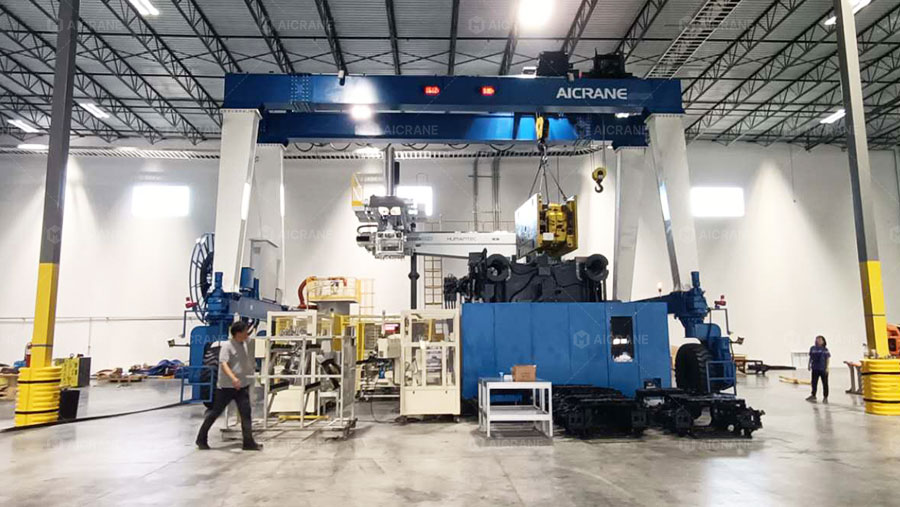
Excellent Resistance to Torsion and Lateral Forces
During gantry crane operation, the structure is subjected not only to vertical loads but also to:
-
Horizontal forces during crane travel
-
Wind loads (especially outdoor applications)
-
Torsional forces caused by uneven loading
Box Girder Structural Benefit:
-
Closed cross-section provides superior torsional resistance.
-
Maintains structural alignment even when the load is offset.
-
Reduces the risk of rail misalignment and wheel wear.
For 30t outdoor gantry cranes operating in open yards or ports, this torsional stability is a major safety advantage.
Enhanced Fatigue Resistance for Long-Term Use
Fatigue performance is a critical design consideration for 30 ton gantry cranes, which often operate continuously over many years.
Why Box Girders Last Longer:
-
Smooth stress flow reduces peak stress points.
-
Welded plate construction allows optimized weld placement.
-
Reduced vibration minimizes micro-crack formation.
Compared with lattice or truss structures, box girders offer longer service life under repeated load cycles, making them ideal for:
-
Steel mills
-
Precast plants
-
Heavy fabrication workshops
Improved Safety and Operational Stability
Safety is always a top priority in lifting equipment design. The box girder structure directly contributes to safer crane operation.
Key Safety Advantages:
-
Stable structure minimizes load sway during lifting and travel.
-
Reduced deformation ensures accurate limit switch activation.
-
Better alignment improves braking and emergency stop performance.
For a 30 ton gantry crane handling high-value or hazardous loads, structural stability translates into lower operational risk.
Better Adaptability to Advanced Crane Systems
Modern 30 ton gantry cranes are often equipped with:
-
Variable frequency drives (VFD)
-
Anti-sway control systems
-
Remote or cabin operation
-
Automation and monitoring systems
Box Girder Compatibility:
-
Provides a stable platform for precision control systems.
-
Supports smooth acceleration and deceleration profiles.
-
Enhances performance of intelligent features by reducing structural vibration.
This makes box girder gantry cranes more suitable for automation-ready and future-upgrade designs.
Optimized Weight-to-Strength Ratio
Despite their high strength, box girders can be lighter than equivalent open-section structures when properly engineered.
Why This Is Important:
-
Lower self-weight reduces wheel loads on rails.
-
Smaller foundations may be required.
-
Improved energy efficiency during crane travel.
For 30 ton gantry cranes, this optimized ratio results in lower total system cost without compromising safety.
Easier Maintenance and Corrosion Protection
Box girder structures also offer advantages in terms of maintenance and surface protection.
Practical Benefits:
-
Smooth outer surfaces simplify painting and coating.
-
Enclosed design reduces dust and debris accumulation.
-
Internal inspection ports can be added for periodic checks.
When combined with proper surface treatment (such as epoxy or marine-grade coatings), box girders provide excellent corrosion resistance, especially for outdoor cranes.
Ideal for Customization and Special Configurations
30 ton gantry cranes are often customized to meet specific project requirements.
Box Girder Flexibility:
-
Easy to adapt for different spans and lifting heights.
-
Suitable for cantilever designs.
-
Compatible with double girder configurations for higher stability.
This flexibility allows manufacturers to tailor box girder cranes for industries such as:
-
Precast concrete production
-
Railway loading yards
-
Shipyards and fabrication plants
Conclusion
The box girder structure has become the industry standard for 30 ton gantry cranes, and for good reason. Its superior load-bearing capacity, high rigidity, excellent torsional resistance, and long fatigue life make it the ideal structural solution for medium to heavy-duty lifting applications.
By choosing a 30 ton gantry crane with a box girder design, users benefit from:
-
Improved safety and stability
-
Higher lifting precision
-
Longer service life
-
Better compatibility with modern control systems
-
Lower total cost of ownership
As industrial lifting demands continue to grow, the box girder structure will remain a cornerstone of reliable, efficient, and future-ready gantry crane design.